JUDAS PRIEST

Judas Priest are an English heavy metal band from Birmingham, England, formed in 1969. Known for a twin lead guitar style, a wide operatic vocal style, and for introducing the S&M leather and studs look into heavy metal, they have sold over 50 million albums worldwide.
After an early career as a secondary act dogged by unsympathetic producers and lineup changes, the band found considerable commercial success in the 1980s. In 1989, they were named as defendants in an unsuccessful lawsuit alleging that subliminal messages on their albums had caused the suicide attempts of two young men.
The band's membership has seen much turnover, including a revolving cast of drummers in the 1970s, and the temporary resignation of singer Rob Halford in the early 1990s. The current line-up consists of lead vocalist Rob Halford, guitarists Glenn Tipton and Richie Faulkner, bassist Ian Hill, and drummer Scott Travis. In 2010, the band announced a farewell tour, with a projected retirement in 2012.
After an early career as a secondary act dogged by unsympathetic producers and lineup changes, the band found considerable commercial success in the 1980s. In 1989, they were named as defendants in an unsuccessful lawsuit alleging that subliminal messages on their albums had caused the suicide attempts of two young men.
The band's membership has seen much turnover, including a revolving cast of drummers in the 1970s, and the temporary resignation of singer Rob Halford in the early 1990s. The current line-up consists of lead vocalist Rob Halford, guitarists Glenn Tipton and Richie Faulkner, bassist Ian Hill, and drummer Scott Travis. In 2010, the band announced a farewell tour, with a projected retirement in 2012.
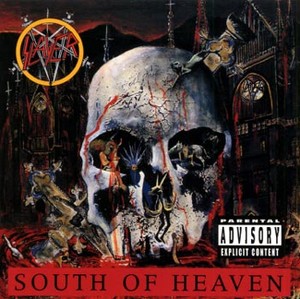
Judas Priest have influenced some metal music since the late-mid 70s either directly or indirectly. They were named the 78th greatest artist of all time by VH1 in 2010 and 2nd Greatest Metal Band by MTV (after Black Sabbath). Slayer acknowledged their devotion by covering "Dissident Aggressor" (Sin After Sin) on their album South of Heaven.
In addition to the sound, Judas Priest are also known for being revolutionaries in heavy metal fashion. Rob Halford thus began incorporating a macho image of what today is known as hardcore metal/biker/S&M style into his look as early as 1978 (to coincide with the release of their album Killing Machine), and the rest of the band followed. It became a mainstay in heavy metal; soon, several other bands, particularly of the NWOBHM and early black metal movements, began incorporating Halford's fashion into their look as well. This sparked a revival in metal in the early '80s, and catapulted them to fame, in both the mainstream and underground. Even in the present, it is not uncommon to find metal artists sporting such a look at concerts.
Their popularity and status as one of the exemplary and influential heavy metal bands has earned them the nickname "Metal Gods" from their song of the same name.
In addition to the sound, Judas Priest are also known for being revolutionaries in heavy metal fashion. Rob Halford thus began incorporating a macho image of what today is known as hardcore metal/biker/S&M style into his look as early as 1978 (to coincide with the release of their album Killing Machine), and the rest of the band followed. It became a mainstay in heavy metal; soon, several other bands, particularly of the NWOBHM and early black metal movements, began incorporating Halford's fashion into their look as well. This sparked a revival in metal in the early '80s, and catapulted them to fame, in both the mainstream and underground. Even in the present, it is not uncommon to find metal artists sporting such a look at concerts.
Their popularity and status as one of the exemplary and influential heavy metal bands has earned them the nickname "Metal Gods" from their song of the same name.

Band members:
Current:
- Ian Hill – bass (1970–present)
- Rob Halford – lead vocals (1973–1992, 2003–present)
- Glenn Tipton – lead guitars, rhythm guitars, keyboards, synthesizer (1974–present)
- Scott Travis – drums, percussion (1989–present)
- Richie Faulkner – lead guitars, rhythm guitars (2011–present)
Former:
- K. K. Downing – lead guitars, rhythm guitars (1970–2011)
- Al Atkins – lead vocals (1970–1973)
- John Ellis – drums, percussion (1970–1971)
- Alan Moore – drums, percussion (1971–1972, 1975–1976)
- Chris Campbell – drums, percussion (1972–1973)
- John Hinch – drums, percussion (1973–1975)
- Simon Phillips – drums, percussion (1977)
- Les Binks – drums, percussion (1977–1979)
- Dave Holland – drums, percussion (1979–1989)
- Tim "Ripper" Owens – lead vocals (1996–2003)
Session musicians:
- Don Airey – keyboards, synthesizer on Painkiller (1990 – track "A Touch of Evil"), Demolition (2001 – multiple tracks), Angel of Retribution (2005 – multiple tracks), Nostradamus (2008 – multiple tracks)
- Jeff Martin – backing vocals on Turbo (1986 – track "Wild Nights, Hot & Crazy Days")
- Tom Allom – milk and beer bottle smashing on British Steel (1980 – track "Breaking the Law")
Discography:
ROCKA ROLLA
(1974)

Rocka Rolla is the debut album by the British heavy metal group Judas Priest, released in 1974. It was produced by Rodger Bain, who had made a name for himself as the producer of Black Sabbath's first three albums.
According to the band, the album was entirely played "live", in studio (i.e. all musicians playing simultaneously as in a concert, vs. the more popular method of each musician's parts being recorded separately and then mixing them).
According to the band there were technical problems in the studio, resulting in poor sound quality and a hiss through the album. The band further claims that the producer had too much control over track selection, and omitted their more popular stage classics- in particular, "Tyrant", "Genocide" and "Victim of Changes". These songs were eventually included on their next album. In addition, the songs "Winter", "Deep Freeze", and "Winter Retreat" form a suite, however they are listed as separate tracks and divided as such on the CD release.
The song "Dying to Meet You" contains a clear break before an unlisted song (often known as "Hero Hero") begins. It may be possible that the record company insisted on there being ten tracks on the album which led to this decision. Alternatively, this unlisted song may simply be the second half of "Dying to Meet You", as this is how the lyrics were printed on their 1978 "Best of..." compilation.
Many of the songs were written before Rob Halford joined the band. The track "Caviar and Meths" was originally a 14-minute epic penned by Halford's predecessor, Al Atkins, but due to time constraints, only the intro is recorded for the album. A longer version of the song appears on original vocalist Al Atkins's 1998 album Victim of Changes. Though not the full-length version, it is notably longer at seven minutes. The album also contains covers of the songs "Winter" and "Never Satisfied".
At this point of the band's career, they had not yet developed their signature look of leather and studs. They had appeared on a British television programme called The Old Grey Whistle Test in 1975, performing "Rocka Rolla" and "Dreamer Deceiver", and their wardrobe was very "hippified" as journalist Malcolm Dome put it. This footage was included on the "Electric Eye" DVD. In addition, the album has some slight progressive rock influences that would continue through to Stained Class, but to a lesser extent, and would be abandoned in later releases.
Drummer John Hinch would be dismissed in 1975, before the next record was to begin being recorded, for what Glenn Tipton would later call him being "musically inadequate".
The album was reissued in 1987 with a different cover. The original album cover, by John Pasche, had been meant for a Rolling Stones album. There are also rumours that the Coca Cola Company brought legal pressure because the original album art too closely resembled their most famous brand. The re-issue cover art (by artist Melvyn Grant, and originally used as the cover for the novel The Steel Tsar) was also used for the US cover of Ballistix for the Turbo Grafx 16 and Commodore Amiga. The band, apparently, considers the "bottle cap" cover to be the official one, as it is the one that appeared on video screens during performances of Never Satisfied on the Epitaph tour.
Since the album was released during the period when K.K. Downing was the band's frontman, this remains the only album on which he is the primary songwriter. On future albums, songs were usually written by Halford, Downing and Tipton, most songs being written by either two or all three of them. This is also one of the only two albums where bassist Ian Hill got a songwriter credit, for the tracks "Winter" and "Caviar and Meths". He would later help write the track "Invader" on the group's fourth studio album Stained Class.
Most of the songs from Rocka Rolla have not been performed by Judas Priest live since the mid-late 1970s, although Rob Halford's solo band performed "Never Satisfied" during live shows in 2003, and the same song is part of the setlist of the Epitaph World Tour.
According to the band, the album was entirely played "live", in studio (i.e. all musicians playing simultaneously as in a concert, vs. the more popular method of each musician's parts being recorded separately and then mixing them).
According to the band there were technical problems in the studio, resulting in poor sound quality and a hiss through the album. The band further claims that the producer had too much control over track selection, and omitted their more popular stage classics- in particular, "Tyrant", "Genocide" and "Victim of Changes". These songs were eventually included on their next album. In addition, the songs "Winter", "Deep Freeze", and "Winter Retreat" form a suite, however they are listed as separate tracks and divided as such on the CD release.
The song "Dying to Meet You" contains a clear break before an unlisted song (often known as "Hero Hero") begins. It may be possible that the record company insisted on there being ten tracks on the album which led to this decision. Alternatively, this unlisted song may simply be the second half of "Dying to Meet You", as this is how the lyrics were printed on their 1978 "Best of..." compilation.
Many of the songs were written before Rob Halford joined the band. The track "Caviar and Meths" was originally a 14-minute epic penned by Halford's predecessor, Al Atkins, but due to time constraints, only the intro is recorded for the album. A longer version of the song appears on original vocalist Al Atkins's 1998 album Victim of Changes. Though not the full-length version, it is notably longer at seven minutes. The album also contains covers of the songs "Winter" and "Never Satisfied".
At this point of the band's career, they had not yet developed their signature look of leather and studs. They had appeared on a British television programme called The Old Grey Whistle Test in 1975, performing "Rocka Rolla" and "Dreamer Deceiver", and their wardrobe was very "hippified" as journalist Malcolm Dome put it. This footage was included on the "Electric Eye" DVD. In addition, the album has some slight progressive rock influences that would continue through to Stained Class, but to a lesser extent, and would be abandoned in later releases.
Drummer John Hinch would be dismissed in 1975, before the next record was to begin being recorded, for what Glenn Tipton would later call him being "musically inadequate".
The album was reissued in 1987 with a different cover. The original album cover, by John Pasche, had been meant for a Rolling Stones album. There are also rumours that the Coca Cola Company brought legal pressure because the original album art too closely resembled their most famous brand. The re-issue cover art (by artist Melvyn Grant, and originally used as the cover for the novel The Steel Tsar) was also used for the US cover of Ballistix for the Turbo Grafx 16 and Commodore Amiga. The band, apparently, considers the "bottle cap" cover to be the official one, as it is the one that appeared on video screens during performances of Never Satisfied on the Epitaph tour.
Since the album was released during the period when K.K. Downing was the band's frontman, this remains the only album on which he is the primary songwriter. On future albums, songs were usually written by Halford, Downing and Tipton, most songs being written by either two or all three of them. This is also one of the only two albums where bassist Ian Hill got a songwriter credit, for the tracks "Winter" and "Caviar and Meths". He would later help write the track "Invader" on the group's fourth studio album Stained Class.
Most of the songs from Rocka Rolla have not been performed by Judas Priest live since the mid-late 1970s, although Rob Halford's solo band performed "Never Satisfied" during live shows in 2003, and the same song is part of the setlist of the Epitaph World Tour.
SAD WINGS OF DESTINY
(1976)
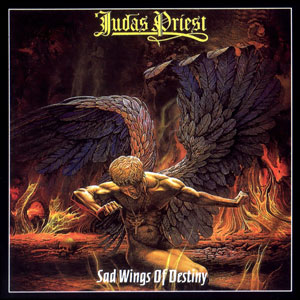
Sad Wings of Destiny is the second album by the British heavy metal group Judas Priest, released in 1976.
The cover art for the album, titled Fallen Angels, was illustrated by Patrick Woodroffe. It is best known for introducing the pitchfork-like symbol known as "the Devil's tuning fork", as worn by the angel.
Sad Wings of Destiny was Judas Priest's second and final studio record made while under contract with Gull Records, an independent UK company. Despite critical acclaim, the band was struggling financially due to lack of support from the label. Shortly after changing management, the band severed their ties with Gull and signed with Columbia Records. Consequently, Judas Priest lost all rights to the recordings on their first two albums and to all demo recordings made during the sessions while under contract with Gull. Sad Wings of Destiny was initially published and distributed by Janus Records in the United States.
Whilst the band lost the rights to recording royalties, they obtained copyright ownership of the songs themselves, many of which became staples for their live shows. "Victim of Changes", "The Ripper", "Tyrant" and "Genocide" appear on Judas Priest Unleashed in the East, a live album released by CBS in 1979. "Diamonds and Rust", a Joan Baez song originally recorded for Sad Wings, but omitted from the final album, was re-recorded for Sin After Sin, their first CBS release, and also on Unleashed. Gull later released the band's original recording of "Diamonds and Rust" on a 'best of' album and their rerelease of Rocka Rolla.
The track "Genocide" mentions the title of the next album, Sin After Sin, in the middle of the song. Glenn Tipton's piano playing features prominently on Sad Wings of Destiny, especially on "Epitaph," a song that features no guitar.
The tracks "Victim of Changes" and "Dreamer Deceiver" were co-written by vocalist Al Atkins, who fronted the band in the early 1970s before being replaced by Rob Halford.
In 2012, "Sad Wings of Destiny" and "Rocka Rolla" were remastered for the first time.
The cover art for the album, titled Fallen Angels, was illustrated by Patrick Woodroffe. It is best known for introducing the pitchfork-like symbol known as "the Devil's tuning fork", as worn by the angel.
Sad Wings of Destiny was Judas Priest's second and final studio record made while under contract with Gull Records, an independent UK company. Despite critical acclaim, the band was struggling financially due to lack of support from the label. Shortly after changing management, the band severed their ties with Gull and signed with Columbia Records. Consequently, Judas Priest lost all rights to the recordings on their first two albums and to all demo recordings made during the sessions while under contract with Gull. Sad Wings of Destiny was initially published and distributed by Janus Records in the United States.
Whilst the band lost the rights to recording royalties, they obtained copyright ownership of the songs themselves, many of which became staples for their live shows. "Victim of Changes", "The Ripper", "Tyrant" and "Genocide" appear on Judas Priest Unleashed in the East, a live album released by CBS in 1979. "Diamonds and Rust", a Joan Baez song originally recorded for Sad Wings, but omitted from the final album, was re-recorded for Sin After Sin, their first CBS release, and also on Unleashed. Gull later released the band's original recording of "Diamonds and Rust" on a 'best of' album and their rerelease of Rocka Rolla.
The track "Genocide" mentions the title of the next album, Sin After Sin, in the middle of the song. Glenn Tipton's piano playing features prominently on Sad Wings of Destiny, especially on "Epitaph," a song that features no guitar.
The tracks "Victim of Changes" and "Dreamer Deceiver" were co-written by vocalist Al Atkins, who fronted the band in the early 1970s before being replaced by Rob Halford.
In 2012, "Sad Wings of Destiny" and "Rocka Rolla" were remastered for the first time.
SIN AFTER SIN
(1977)

Sin After Sin is the third album by British heavy metal group Judas Priest, released in 1977. It was the band's first album on Columbia Records after their contract with Gull Records was terminated, as a consequence of which they lost all rights to Rocka Rolla and Sad Wings of Destiny, and any other demo recordings made during the production of the two albums. The album features session drummer Simon Phillips, as the band had recently parted ways with drummer Alan Moore.
In 1988, the band Slayer covered the song "Dissident Aggressor" on their South of Heaven album. Arch Enemy covered the song "Starbreaker", which was eventually released as a bonus track on the Wages of Sin album. Devin Townsend (Strapping Young Lad) covered "Sinner" which can be found on Tribute to Judas Priest Album.
STAINED CLASS
(1978)

Stained Class is the fourth album by British heavy metal group Judas Priest, released in February 1978. A popular album in the band's catalogue, Stained Class showcased a more streamlined songwriting style. The production is crisper, clearer, and cleaner than any of their preceding albums. This is the only Judas Priest album to feature songwriting by all five members (one of Ian Hill's few contributions to the songwriting process for the band, and the sole contribution thereof by then-drummer Les Binks – the guitar riff for "Beyond the Realms of Death"). Following this album the band broke its songwriting team down to Rob Halford, K.K. Downing and Glenn Tipton, with occasional contributions solely by Tipton.
The sleeve artwork, by Roslav Szaybo at CBS Records, introduced their classic logo, replacing the Gothic Script logo of earlier releases. Stained Class was highly influential in the development of the speed metal subgenre and was the first Judas Priest album to dent the Billboard 200. The album was remastered in 2001, with two bonus tracks added. In 2004, UK magazine Metal Hammer named Stained Class the heaviest metal album of all time.
The sleeve artwork, by Roslav Szaybo at CBS Records, introduced their classic logo, replacing the Gothic Script logo of earlier releases. Stained Class was highly influential in the development of the speed metal subgenre and was the first Judas Priest album to dent the Billboard 200. The album was remastered in 2001, with two bonus tracks added. In 2004, UK magazine Metal Hammer named Stained Class the heaviest metal album of all time.
Stained Class received unfortunate negative attention due to the infamous and bizarre 1990 civil action brought against the band by the family of a teenager, James Vance, who entered a suicide pact with his friend Ray Belknap after listening to "Better By You, Better Than Me" on 23 December 1985. Belknap succeeded in killing himself, and Vance was left horribly disfigured. The suit alleged that the band recorded subliminal messages on the song that said "do it." The suit was eventually dismissed. The song was originally written and performed by the band Spooky Tooth, and the lyrics are about a person who's upset at the world's current state and is leaving his lover to try to change things by joining the war effort.
KILLING MACHINE
(1978)

Killing Machine is the fifth studio album by British heavy metal band Judas Priest, released in November 1978. The album saw Judas Priest head towards a more commercial style; however it did still contain the dark lyrical themes as heard in their previous albums. At about the same time, the band members adopted their now-famous "leather-and-studs" image. Killing Machine was retitled Hell Bent for Leather for US release, as the US branch of Columbia/CBS did not like the "murderous implications" of the album title. "The Green Manalishi (With the Two-Pronged Crown)" an early Fleetwood Mac cover, was added to the running order in the US.
The album was remastered in 2001, with two bonus tracks added (three in the UK). The bonus track "Fight for Your Life" was the "original" version of Judas Priest's "Rock Hard Ride Free" from their Defenders of the Faith album. "The Green Manalishi (With the Two-Pronged Crown)" is considered a bonus track on the UK remaster, but a regular track on the US version.
In 2010, audiophile label Audio Fidelity released a limited-edition 24-karat gold CD of the album. Mastering was done by Steve Hoffman. This does not contain the bonus tracks from the 2001 edition.
This is the first Judas Priest album where Glenn Tipton incorporated the guitar technique of tapping into his soloing style. This is also the final album for drummer Les Binks who had joined the band in late 1977 for the recording of Stained Class, he is credited with helping develop the traditional Priest percussive sound.
The album was remastered in 2001, with two bonus tracks added (three in the UK). The bonus track "Fight for Your Life" was the "original" version of Judas Priest's "Rock Hard Ride Free" from their Defenders of the Faith album. "The Green Manalishi (With the Two-Pronged Crown)" is considered a bonus track on the UK remaster, but a regular track on the US version.
In 2010, audiophile label Audio Fidelity released a limited-edition 24-karat gold CD of the album. Mastering was done by Steve Hoffman. This does not contain the bonus tracks from the 2001 edition.
This is the first Judas Priest album where Glenn Tipton incorporated the guitar technique of tapping into his soloing style. This is also the final album for drummer Les Binks who had joined the band in late 1977 for the recording of Stained Class, he is credited with helping develop the traditional Priest percussive sound.
BRITISH STEEL
(1980)

British Steel is the sixth album by the British heavy metal band Judas Priest, released on 14 April 1980. It saw the band reprise the commercial sound they had established on Killing Machine however; this time, they abandoned many of the dark lyrical themes which had been prominent on their previous releases. British Steel was recorded at Tittenhurst Park, home of former Beatle Ringo Starr, after a false start at Startling Studios, a recording studio located on Tittenhurst's grounds. Digital sampling was not yet widely available at the time of recording, so the band used analog recording of smashing milk bottles to be included in "Breaking the Law", as well as various sounds in "Metal Gods" produced by billiard cues and trays of cutlery. It was released in the UK at a discount price of £3.99, with the advertisements in the music press bearing the legend "British Steal". Songs "Breaking the Law", "United", and "Living After Midnight" were released as singles, while the track "Metal Gods" earned the band members their moniker.
British Steel is also Judas Priest's first album to feature songwriting for all songs by only current members of the band at the time. Rocka Rolla and Sad Wings of Destiny featured songwriting by Al Atkins. Sin After Sin inclues a cover of Joan Baez's Diamonds & Rust. Stained Class has a cover of Spooky Tooth's Better By You, Better Than Me. Killing Machine features a cover of Fleetwood Mac's The Green Manalishi.
The album was remastered in 2001, with two bonus tracks added. Bonus track "Red, White, and Blue" was written in the earlier years of Priest's career. It was recorded at Compass Point Studios in Nassau in July 1985. The second bonus track, a live performance of "Grinder", was recorded on 5 May 1984, in Los Angeles during the Defenders of the Faith tour. The first album to feature drummer Dave Holland.
In 2009 Judas Priest kicked off their 30th anniversary tour in the US by playing the entire album live for the first time. The only other Judas Priest albums of which all the songs have been performed live are Defenders of the Faith and Rocka Rolla, but neither of them were played in the original LP running order or during the same tour.
Anthrax guitar player Scott Ian said in an interview in the documentary Heavy Metal: Louder than Life that British Steel was probably the album that really defined heavy metal, because, according to him, it did away with the "last shards of blues" that had otherwise been characteristic of the genre. He said, "Even the title... how does it get more metal than that?"
The 30th anniversary release of the album came with a DVD and CD of a live show recorded on 17 August 2009 at the Seminole Hard Rock Arena in Hollywood, Florida as part of the British Steel 30th Anniversary tour. The live versions of all the British Steel tracks from this release were also made available as downloadable content for the Rock Band video game series beginning 11 May 2010.
British Steel is also Judas Priest's first album to feature songwriting for all songs by only current members of the band at the time. Rocka Rolla and Sad Wings of Destiny featured songwriting by Al Atkins. Sin After Sin inclues a cover of Joan Baez's Diamonds & Rust. Stained Class has a cover of Spooky Tooth's Better By You, Better Than Me. Killing Machine features a cover of Fleetwood Mac's The Green Manalishi.
The album was remastered in 2001, with two bonus tracks added. Bonus track "Red, White, and Blue" was written in the earlier years of Priest's career. It was recorded at Compass Point Studios in Nassau in July 1985. The second bonus track, a live performance of "Grinder", was recorded on 5 May 1984, in Los Angeles during the Defenders of the Faith tour. The first album to feature drummer Dave Holland.
In 2009 Judas Priest kicked off their 30th anniversary tour in the US by playing the entire album live for the first time. The only other Judas Priest albums of which all the songs have been performed live are Defenders of the Faith and Rocka Rolla, but neither of them were played in the original LP running order or during the same tour.
Anthrax guitar player Scott Ian said in an interview in the documentary Heavy Metal: Louder than Life that British Steel was probably the album that really defined heavy metal, because, according to him, it did away with the "last shards of blues" that had otherwise been characteristic of the genre. He said, "Even the title... how does it get more metal than that?"
The 30th anniversary release of the album came with a DVD and CD of a live show recorded on 17 August 2009 at the Seminole Hard Rock Arena in Hollywood, Florida as part of the British Steel 30th Anniversary tour. The live versions of all the British Steel tracks from this release were also made available as downloadable content for the Rock Band video game series beginning 11 May 2010.
POINT OF ENTRY
(1981)

Point of Entry is the seventh album from the British heavy metal band Judas Priest. It was released on 26 February 1981.
In 1980 Judas Priest garnered some airplay with "Breaking the Law" and "Living After Midnight" from their album British Steel. As a result the band pursued a more radio friendly direction on Point of Entry.
In the booklet of the Remastered CD, the band states:
"Recorded on the island of Ibiza with multiple distractions, glorious sunshine, and extremely low cost alcohol, this album was regarded with mixed feelings because it was different from what people expected. The album was nearly all spontaneously written and performed in Ibiza - it was an experiment in the sense that before this we had already written the majority of the songs before going into the studio."
Three singles were released from the album: "Heading Out to the Highway", "Don't Go" and "Hot Rockin' ", all of which had accompanying music videos. The song "Heading Out to the Highway" has been a staple in live shows since its release, and "Hot Rockin' " is still performed today. On the 2005 "Re-united" tour they also played "Solar Angels"; on rare occasions: on the World Wide Blitz Tour of 1981 (supporting Point of Entry), this was the opening song on every show.
The album was remastered in 2001, with two bonus tracks added, a live version of "Desert Plains" and "Thunder Road", a track from the Ram It Down sessions.
The US cover differed from the rest of the world, this being repeated with the remaster. The US artwork featured computer printer paper to simulate the line in the middle of the road, and white cardboard boxes on the back.
In 1980 Judas Priest garnered some airplay with "Breaking the Law" and "Living After Midnight" from their album British Steel. As a result the band pursued a more radio friendly direction on Point of Entry.
In the booklet of the Remastered CD, the band states:
"Recorded on the island of Ibiza with multiple distractions, glorious sunshine, and extremely low cost alcohol, this album was regarded with mixed feelings because it was different from what people expected. The album was nearly all spontaneously written and performed in Ibiza - it was an experiment in the sense that before this we had already written the majority of the songs before going into the studio."
Three singles were released from the album: "Heading Out to the Highway", "Don't Go" and "Hot Rockin' ", all of which had accompanying music videos. The song "Heading Out to the Highway" has been a staple in live shows since its release, and "Hot Rockin' " is still performed today. On the 2005 "Re-united" tour they also played "Solar Angels"; on rare occasions: on the World Wide Blitz Tour of 1981 (supporting Point of Entry), this was the opening song on every show.
The album was remastered in 2001, with two bonus tracks added, a live version of "Desert Plains" and "Thunder Road", a track from the Ram It Down sessions.
The US cover differed from the rest of the world, this being repeated with the remaster. The US artwork featured computer printer paper to simulate the line in the middle of the road, and white cardboard boxes on the back.
SCREAMING FOR VENGEANCE
(1982)
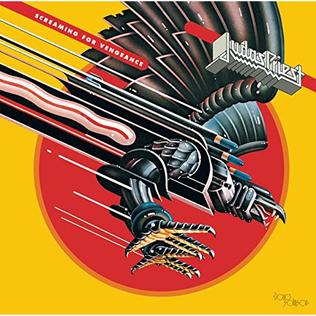
Screaming for Vengeance is the eighth studio album by British heavy metal band Judas Priest. It was recorded at Ibiza Sound Studios, Ibiza, Spain and mixed at Beejay Recording Studios and Bayshore Recording Studios in Coconut Grove, Florida. It was first released on 17 July 1982. A remastered CD was released in May 2001.
"From an unknown land and through distant skies came a winged warrior. Nothing remained sacred, no one was safe from the Hellion as it uttered its battle cry...Screaming for Vengeance."
-- Album back cover
The album reached No. 11 in the UK and No. 17 on Billboard 200 Pop Albums and made Judas Priest much more popular than they were after their British Steel album. It went gold (RIAA) on 29 October 1982, platinum on 18 April 1983 and 2x platinum on 16 October 2001, being their first studio album to achieve the two latter awards. This album also includes their hit "You've Got Another Thing Comin'" and one of their most-popular on-stage performances, "Electric Eye".
The band wrote about the bonus track "Prisoner of Your Eyes" in the remaster booklet as follows:
"This is one of two versions of this particular song – the second version having a different chorus. The majority of this track is still as it was put down at the time but with lead breaks from Glenn and K.K. added at a later date. It's very emotional and epitomises the light and shade style of Judas Priest which is the trademark of the band."
The album came 15th on IGN's 25 most influential metal albums. Screaming for Vengeance also came 10th on Metal-Rules.com's 100 greatest metal albums. Kerrang! magazine listed the album at No. 46 among the "100 Greatest Heavy Metal Albums of All Time".
During the U.S. tour to support the album in 1982, Judas Priest were supported by bands such as Iron Maiden, Krokus, and Uriah Heep (in support of their album Abominog).
This album was the first entire album released as downloadable content for the video games Rock Band and Rock Band 2.
The title song "Screaming for Vengeance" was played on the main site for the video game Brütal Legend. Rob Halford plays both a villain in the game (named General Lionwhyte) and a heroic character called the Fire Baron.
"From an unknown land and through distant skies came a winged warrior. Nothing remained sacred, no one was safe from the Hellion as it uttered its battle cry...Screaming for Vengeance."
-- Album back cover
The album reached No. 11 in the UK and No. 17 on Billboard 200 Pop Albums and made Judas Priest much more popular than they were after their British Steel album. It went gold (RIAA) on 29 October 1982, platinum on 18 April 1983 and 2x platinum on 16 October 2001, being their first studio album to achieve the two latter awards. This album also includes their hit "You've Got Another Thing Comin'" and one of their most-popular on-stage performances, "Electric Eye".
The band wrote about the bonus track "Prisoner of Your Eyes" in the remaster booklet as follows:
"This is one of two versions of this particular song – the second version having a different chorus. The majority of this track is still as it was put down at the time but with lead breaks from Glenn and K.K. added at a later date. It's very emotional and epitomises the light and shade style of Judas Priest which is the trademark of the band."
The album came 15th on IGN's 25 most influential metal albums. Screaming for Vengeance also came 10th on Metal-Rules.com's 100 greatest metal albums. Kerrang! magazine listed the album at No. 46 among the "100 Greatest Heavy Metal Albums of All Time".
During the U.S. tour to support the album in 1982, Judas Priest were supported by bands such as Iron Maiden, Krokus, and Uriah Heep (in support of their album Abominog).
This album was the first entire album released as downloadable content for the video games Rock Band and Rock Band 2.
The title song "Screaming for Vengeance" was played on the main site for the video game Brütal Legend. Rob Halford plays both a villain in the game (named General Lionwhyte) and a heroic character called the Fire Baron.
DEFENDERS OF THE FAITH
(1984)
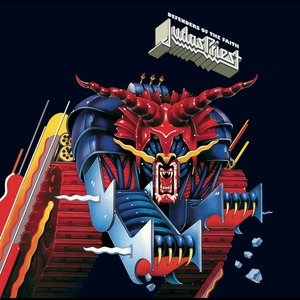
Defenders of the Faith is the ninth studio album by British heavy metal band Judas Priest. It was recorded at Ibiza Sound Studios, Ibiza, Spain and mixed from September to November 1983 at DB Recording Studios and Bayshore Recording Studios in Coconut Grove, Miami, Florida. The LP and cassette tape were released on 4 January 1984 and later appeared on CD in July. A remastered CD was released in May 2001. Three tracks were released as singles: "Freewheel Burning", "Some Heads Are Gonna Roll" and "Love Bites".
"Rising from darkness where Hell hath no mercy and the screams for vengeance echo on forever. Only those who keep the faith shall escape the wrath of the Metallian... Master of all metal."
-- Album back cover
The cover art by Doug Johnson (who also designed the Hellion in Screaming for Vengeance) depicts the Metallian, a ram-horned, tiger-like land assault creature with Gatling guns and tank tracks conceptualized by the band.
"Eat Me Alive" was listed at #3 on the Parents Music Resource Center's "Filthy Fifteen", a list of 15 songs the organization found most objectionable. PMRC co-founder Tipper Gore stated the song was about oral sex at gunpoint. In response to the allegations, Priest recorded the song "Parental Guidance" on the follow-up album Turbo. Defenders of the Faith is a guitar-related section in Guitar World Magazine in which Guitar World readers are shown along with personal information. This is referred to as "Defending the Faith".
On the tour for this album, the band had played every song live, with the exception of "Eat Me Alive". On the tour for the Nostradamus album, in 2008, the band played many songs which had never been played live before, one of them being "Eat Me Alive". This made Defenders of the Faith the only Judas Priest album from which every song had been played live (other than the first LP Rocka Rolla), until the 2009 tour where British Steel was performed in full, in order.
"The Sentinel" was covered by Machine Head for the special edition version of their 2011 album Unto the Locust.
"Rising from darkness where Hell hath no mercy and the screams for vengeance echo on forever. Only those who keep the faith shall escape the wrath of the Metallian... Master of all metal."
-- Album back cover
The cover art by Doug Johnson (who also designed the Hellion in Screaming for Vengeance) depicts the Metallian, a ram-horned, tiger-like land assault creature with Gatling guns and tank tracks conceptualized by the band.
"Eat Me Alive" was listed at #3 on the Parents Music Resource Center's "Filthy Fifteen", a list of 15 songs the organization found most objectionable. PMRC co-founder Tipper Gore stated the song was about oral sex at gunpoint. In response to the allegations, Priest recorded the song "Parental Guidance" on the follow-up album Turbo. Defenders of the Faith is a guitar-related section in Guitar World Magazine in which Guitar World readers are shown along with personal information. This is referred to as "Defending the Faith".
On the tour for this album, the band had played every song live, with the exception of "Eat Me Alive". On the tour for the Nostradamus album, in 2008, the band played many songs which had never been played live before, one of them being "Eat Me Alive". This made Defenders of the Faith the only Judas Priest album from which every song had been played live (other than the first LP Rocka Rolla), until the 2009 tour where British Steel was performed in full, in order.
"The Sentinel" was covered by Machine Head for the special edition version of their 2011 album Unto the Locust.
TURBO
(1986)
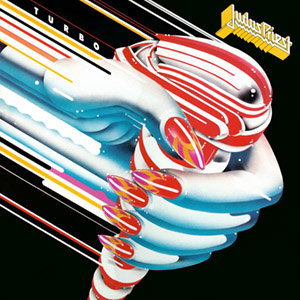
Turbo is the 10th studio album by British heavy metal band Judas Priest, recorded in June – November, 1985, at Compass Point Studios in Nassau, Bahamas and mixed in January and February, 1986, at Record Plant Studios in Los Angeles, California. Turbo was first released by Columbia on April 15, 1986. A remastered CD was released in 2002, adding two bonus tracks. The album marked the band's first use of guitar synthesizers.
RAM IT DOWN
(1988)

Ram It Down is the eleventh studio album by Judas Priest, released in 1988 through Columbia Records; a remastered edition containing two bonus tracks was reissued in 2001. The album earned gold certification (500,000 sales) on July 18, 1988. The band toured in Europe and North America to support the release of the album.
In 1986, Judas Priest intended to record a double album called Twin Turbos of which half would be lighter, more commercial rock, and the other half would be similarly polished but heavier and less synth-driven. As it happened, record labels being notoriously timid about double albums, the project was split into two releases, with the heavier Twin Turbos material being relegated to this later album. While it largely failed to capture the metal public's approval, elements such as the more technical drumming, high speeds, and sci-fi themes prefigured their return-to-form classic, Painkiller. A drum machine was used at some parts because of Dave Holland's health problems. Judas Priest had also done a rendition of Chuck Berry's "Johnny B. Goode" for the movie Johnny Be Good, which was the only single from this album. This would be the final album involving long-time drummer Dave Holland and producer Tom Allom. Allom would later return as co-producer to the 2009 live release A Touch of Evil: Live.
The epic song "Blood Red Skies" has been described by Glenn Tipton as "Victim of Changes model 1988". The song was never performed live until the "Epitaph" world tour of 2011, where it was included in the setlist.
The epic song "Blood Red Skies" has been described by Glenn Tipton as "Victim of Changes model 1988". The song was never performed live until the "Epitaph" world tour of 2011, where it was included in the setlist.
PAINKILLER
(1990)
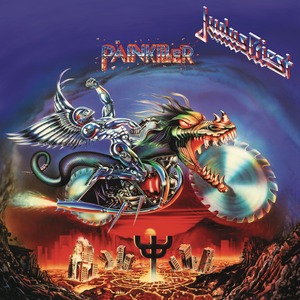
Painkiller is a 1990 gold-certified album by British heavy metal band Judas Priest, their 12th studio album. The album was recorded at Miraval Studios, Brignoles, France in early 1990, and mixed at Wisseloord Studios, Hilversum, the Netherlands later that year. It was the first album with current drummer Scott Travis, who was recruited from the band Saints Or Sinners. The original LP, cassette and CD versions were released on 3 September 1990. A re-mastered CD was released in May 2001. The album received a Grammy nomination for Best Metal Performance at the 20 February 1991 33rd Annual Grammy Awards.
Following the tour for this album, singer Rob Halford left the band in May 1992 and maintained little contact with his former bandmates throughout the 1990s. The reason for this was the growing tension within the band. Halford wanted to create his new band, Fight, and had to legally leave Judas Priest to allow his creation to be sold. Judas Priest declared that they did not exist anymore after Halford had left. However, the band would re-vamp, record, and tour several years later, with new singer Tim 'Ripper' Owens, on the albums Jugulator and Demolition.
Following the tour for this album, singer Rob Halford left the band in May 1992 and maintained little contact with his former bandmates throughout the 1990s. The reason for this was the growing tension within the band. Halford wanted to create his new band, Fight, and had to legally leave Judas Priest to allow his creation to be sold. Judas Priest declared that they did not exist anymore after Halford had left. However, the band would re-vamp, record, and tour several years later, with new singer Tim 'Ripper' Owens, on the albums Jugulator and Demolition.
JUGULATOR
(1997)

Jugulator is the 13th studio album by British heavy metal band Judas Priest. It was released in Japan on October 16, 1997 and the rest of the world on October 28, 1997. It was the first of two studio albums featuring vocalist Tim 'Ripper' Owens. The lyrics dealt with harsher themes than previous releases, including the eponymous mechanized beast which disembowels its prey, and the end of the world in the song "Cathedral Spires". The guitars were also tuned down as low as C# and C.
The entire album seems to describe the end of the world, from the coming of the Jugulator ("Jugulator") to the actual ending of it ("Cathedral Spires"). The Jugulator itself seems to be a metaphor for the evil that is done in the world. Songs like "Dead Meat", "Decapitate" and "Burn in Hell" all describe the evils that humans do. In the end, the evil deeds are so great in number that it consumes and destroys the world.
Reaction to the album was roughly divided among those who enjoyed the album on its own terms, those who liked the music but preferred that Rob Halford would sing it, and those who disliked it on all counts. Glenn Tipton defended the musical changes: "You must remember that two albums went missing between 1990 and "Jugulator". To us, it's not the huge leap some people see it as". However, "Bullet Train" and "Cathedral Spires" are generally regarded as classics, even by some critics who disliked the rest of the album.
A music video was put into circulation for the song "Burn in Hell", though over 2 minutes of the song was removed in the final video. "Jugulator" and "Blood Stained" were also included on Judas Priest's box set Metalogy.
Bullet Train was nominated for a Grammy Award for Best Metal Performance in 1998 but lost to Metallica's "Better than You".
The entire album seems to describe the end of the world, from the coming of the Jugulator ("Jugulator") to the actual ending of it ("Cathedral Spires"). The Jugulator itself seems to be a metaphor for the evil that is done in the world. Songs like "Dead Meat", "Decapitate" and "Burn in Hell" all describe the evils that humans do. In the end, the evil deeds are so great in number that it consumes and destroys the world.
Reaction to the album was roughly divided among those who enjoyed the album on its own terms, those who liked the music but preferred that Rob Halford would sing it, and those who disliked it on all counts. Glenn Tipton defended the musical changes: "You must remember that two albums went missing between 1990 and "Jugulator". To us, it's not the huge leap some people see it as". However, "Bullet Train" and "Cathedral Spires" are generally regarded as classics, even by some critics who disliked the rest of the album.
A music video was put into circulation for the song "Burn in Hell", though over 2 minutes of the song was removed in the final video. "Jugulator" and "Blood Stained" were also included on Judas Priest's box set Metalogy.
Bullet Train was nominated for a Grammy Award for Best Metal Performance in 1998 but lost to Metallica's "Better than You".
DEMOLITION
(2001)
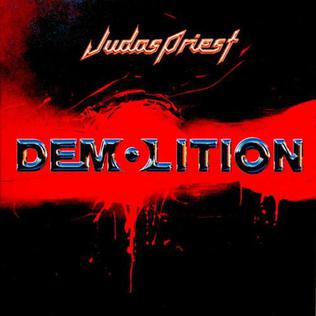
Demolition is British heavy metal band Judas Priest's fourteenth studio album, and the first in the decade of the 2000s. It is the second and final studio album to feature Tim 'Ripper' Owens on vocals, and also one of the few albums to feature a Parental Advisory label. Following the lukewarm-to-decent reception to Jugulator, the band scrambled to assess what exactly went wrong and determined that fans preferred a sound more faithful to Priest's back catalogue. The resulting album would be an amalgam of Jugulator-style riffs, references to 80s Priest, and sporadic nu-metal additions such as quasi-rapping, samples, and industrial-style beats. While the ostensible aim was to offer something for every possible fan, in the end, the album received a much poorer reception than Jugulator by most fans and would result in the eventual reunion of the classic lineup.
The songs "Machine Man" and "Feed on Me" were included in Judas Priest's box set Metalogy.
The album was produced by guitarist Glenn Tipton, who also took over as the primary songwriter with this album. For a long time, the band's main songwriting team had consisted of Rob Halford, K.K. Downing and Tipton. However, after Halford departed from the band, Downing and Tipton went on to write all the songs on Jugulator. On this album, many of the songs were written solely by Tipton, with contributions from Downing on several songs. Former producer Chris Tsangarides, who co-wrote the song "A Touch of Evil" on the Painkiller album, also assisted Tipton in the writing of a few songs. Even drummer Scott Travis co-wrote the track "Cyberface", marking his first and only contribution to songwriting in the band's history (former drummer Les Binks was the only other Judas Priest drummer to co-write a song). This was also the first album since Painkiller to feature a guest appearance by keyboardist Don Airey, who had previously played on "A Touch of Evil".
The songs "Machine Man" and "Feed on Me" were included in Judas Priest's box set Metalogy.
The album was produced by guitarist Glenn Tipton, who also took over as the primary songwriter with this album. For a long time, the band's main songwriting team had consisted of Rob Halford, K.K. Downing and Tipton. However, after Halford departed from the band, Downing and Tipton went on to write all the songs on Jugulator. On this album, many of the songs were written solely by Tipton, with contributions from Downing on several songs. Former producer Chris Tsangarides, who co-wrote the song "A Touch of Evil" on the Painkiller album, also assisted Tipton in the writing of a few songs. Even drummer Scott Travis co-wrote the track "Cyberface", marking his first and only contribution to songwriting in the band's history (former drummer Les Binks was the only other Judas Priest drummer to co-write a song). This was also the first album since Painkiller to feature a guest appearance by keyboardist Don Airey, who had previously played on "A Touch of Evil".
ANGEL OF RETRIBUTION
(2005)

Angel of Retribution is the 15th studio album by British heavy metal band Judas Priest, released in 2005. It marks the return of Rob Halford, after a 12 year departure from the band. The album debuted at #13 on the U.S. Billboard chart, which made it the second highest chart of a Judas Priest album (only before Nostradamus). It also marked the first time Judas Priest have been the number 1 artist on a national chart (in Greece). The album was produced by Roy Z, who co-wrote the song "Deal with the Devil".
Within the album, nods to the sound of past albums and songs are found, as well as lyrics that apparently reference earlier songs. The song "Demonizer" references both "The Hellion" from Screaming for Vengeance as well as "Painkiller" from the eponymous album. "Hellrider" mentions "Ram It Down" off the same-titled album, and "Tyrant" from Sad Wings of Destiny. "Eulogy" references "Stained Class" and "The Sentinel" from the albums Stained Class and Defenders of the Faith, respectively. Finally, "Worth Fighting For" acts as a sequel/prequel to "Desert Plains" from Point of Entry.
The song "Deal With the Devil" can be viewed as a autobiography of Judas Priest, telling their origins from the Black Country of England's West Midlands, mentioning their transitory days gigging around England and practicing at the Church of Holy Joseph in Walsall, which is where Judas Priest was effectively born. "Deal With the Devil" also mentions the song "Blood Red Skies" from Ram it Down.
The song "Deal With the Devil" can be viewed as a autobiography of Judas Priest, telling their origins from the Black Country of England's West Midlands, mentioning their transitory days gigging around England and practicing at the Church of Holy Joseph in Walsall, which is where Judas Priest was effectively born. "Deal With the Devil" also mentions the song "Blood Red Skies" from Ram it Down.
The album was released on the DualDisc format, which had traditional CD content on one side, and DVD content on the other side. The DVD side of this album contained a documentary entitled "Reunited", as well as the entire album in an enhanced audio format.
NOSTRADAMUS
(2008)

Nostradamus is a concept album by English heavy metal band Judas Priest, focusing on the 16th century prophet Nostradamus. The band's first concept album, it was originally intended to be released in late 2006 before being pushed back to a 2007 release, and was finally released in June 2008 on Epic Records. It is the band's 16th studio album, and the last to feature K.K. Downing, who retired three years later.
Judas Priest toured with Motörhead, Heaven & Hell, and Testament on the Metal Masters Tour to promote Nostradamus. The band also performed a world tour in 2008 and 2009 in support of the album.
Judas Priest toured with Motörhead, Heaven & Hell, and Testament on the Metal Masters Tour to promote Nostradamus. The band also performed a world tour in 2008 and 2009 in support of the album.
Guitarist K. K. Downing revealed in a February 2007 interview with Brave Words & Bloody Knuckles that 18 tracks had been recorded with a total length of more than 90 minutes and that there was not much he would like to cut down. Musically, the album contains symphonic orchestrations including the use of keyboards and choirs which is unlike anything the band has previously attempted. In November 2007, the band began mixing the album.
Nostradamus centres on the life and times of the seer. The first disc details various forecasts he has about the future and the end of the world. This leads to him being exiled. Later on, after his death, the world realizes just how right he was.
And now new and old fans enjoy the true form of metal:








_cover.jpg)